
Phishing

SecAIQ is now a free mobile app for iPhone, iPad, Android phones and Android tablets: plain-language security and AI safety guides, free tools, a glossary and news, with no account needed.

A phishing campaign uses fake AI assistant websites and browser-in-browser tricks to steal advertising account logins and MFA codes from agency staff and media buyers.

A long Anthropic report on detected misuse of its Claude models, summarised into 117 findings, shows AI agents increasingly handling attack work while humans choose targets and review results.

How an AI agent should notice when it, rather than the human it serves, is the actual target of a manipulation attempt.

You are your own IT department. Here is the short, practical list of what actually matters for a one-person business, in the order it matters.

A calm, practical starting point for protecting your family's accounts, devices, and data, without needing to become a security expert first.

The practical, budget-conscious starting point for protecting your business, your team, and your customers, without needing a dedicated security hire.

Business email compromise causes more reported financial losses than any other cybercrime category. Understanding how it works is the key to stopping it.

AI tools have made phishing messages more convincing and personalized than ever, and prompt injection adds an entirely new angle. Here's what's changed, and what still works to defend against it.
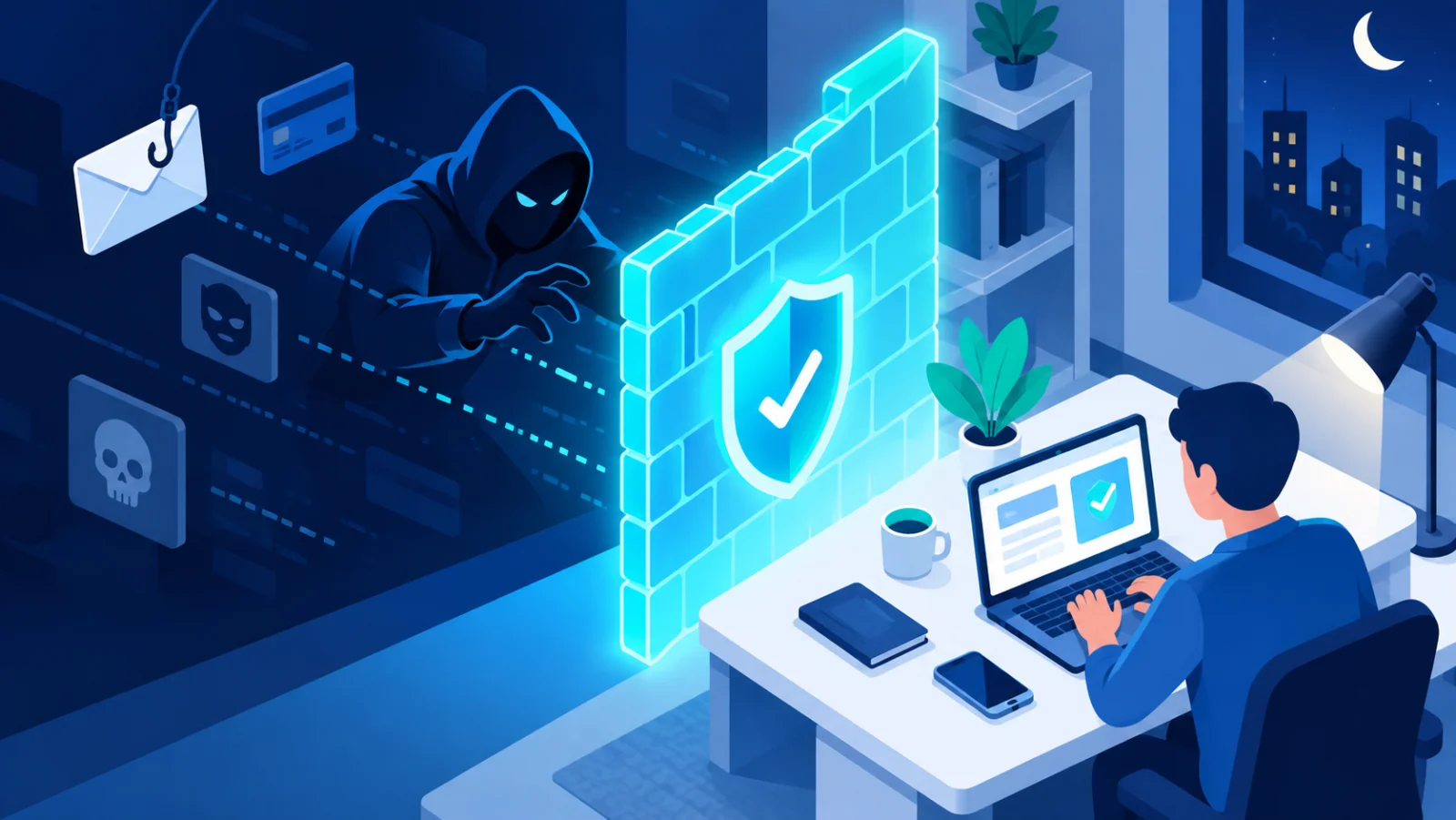
Fake messages, "act now" pressure, and convincing lookalike websites, learn the common tricks scammers use and how to protect yourself.

A mainstream browser now automatically flags images carrying C2PA provenance data, surfacing an AI-generated badge without requiring an extension or any technical know-how from the user.

Vishing attacks using AI-cloned executive voices are rising, with attackers needing only a short public recording to produce a convincing impersonation for a wire-transfer request.