
Recognizing and Avoiding Online Scams
Fake messages, "act now" pressure, and convincing lookalike websites, learn the common tricks scammers use and how to protect yourself.
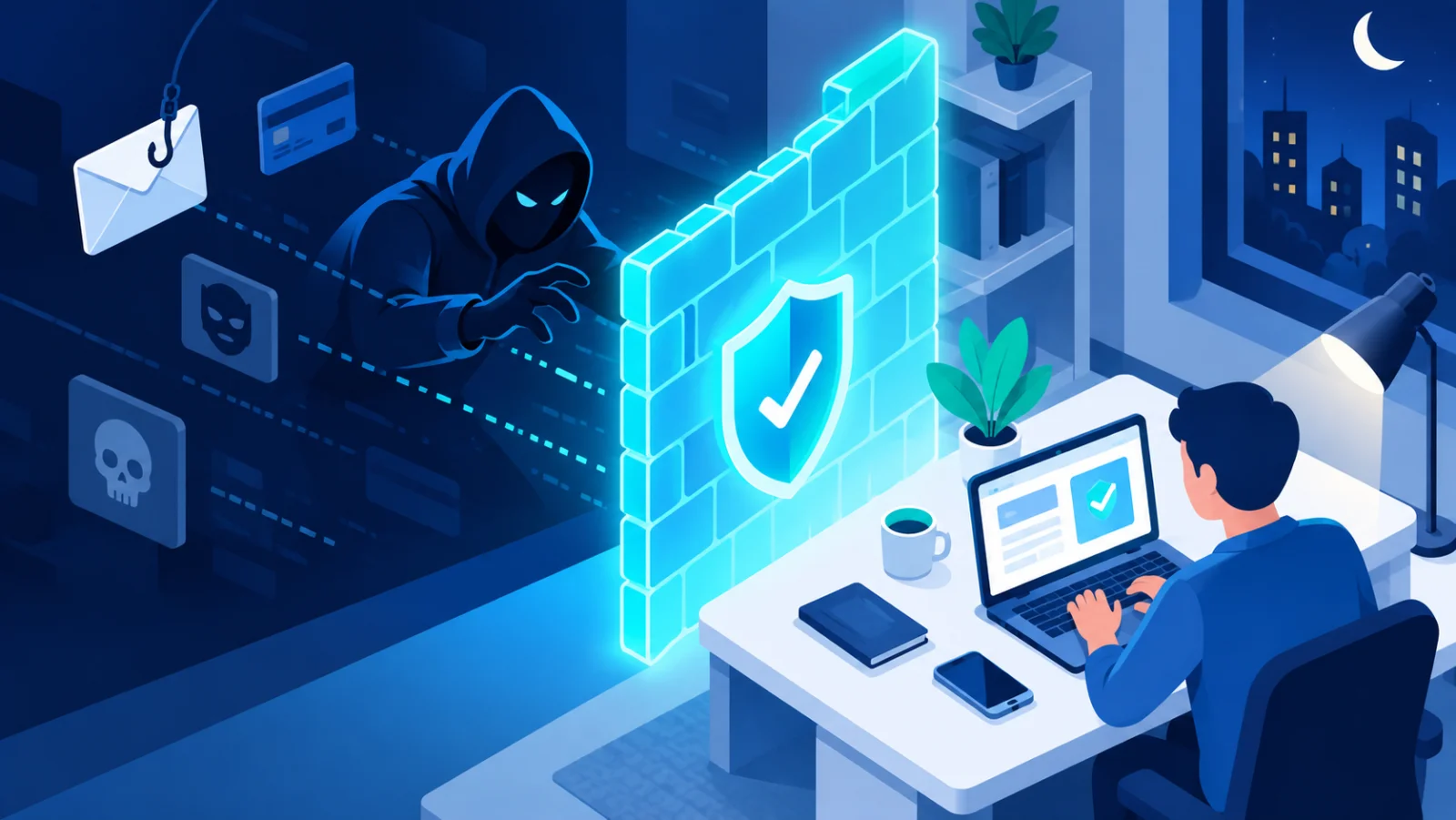
Scammers impersonate a bank, a delivery company, a government agency, or someone you know, trying to push you into acting quickly. Their goal is your money or your information. The tactics vary, but the logic is always the same: trigger trust, fear, or greed, and get you to act before you stop to think. This is called social engineering↗.
Common traps
- Fake SMS/email: "Your package is waiting, pay a fee" or "Your account will be closed" links.
- Fake login pages: near-perfect copies of a bank's or app's real sign-in page.
- Phone scams: someone posing as "bank/support staff" asking for a code or remote access to your device.
- Investment/prize scams: promises of "guaranteed, high returns", fake crypto platforms.
- Fake shopping sites: suspiciously cheap products, sites that demand bank transfer only, with no real contact information.
- Romance/emotional scams: fake "romantic" or "help me" stories designed to extract money.
The golden rule: stop, think, verify
- Stop: urgency and fear are the biggest red flags. Any request that pressures you to hurry is suspicious.
- Think: would a real organization ever ask for your password, PIN, or one-time code? It would not.
- Verify: contact the organization using the number on the back of your card or on its official website, never the number or link in the message itself.
A few solid habits
- Check the actual address before clicking a link; be suspicious of unfamiliar domains.
- Never let anyone talk you into installing remote-access software (AnyDesk, TeamViewer, etc.) on your device.
- Never share a one-time verification code with anyone.
- Only pay through trusted, well-known methods, be wary of anyone insisting on "bank transfer or crypto only".
No legitimate bank or organization will ever ask for your password, PIN, or verification code by phone or text.
If you realize you've been scammed
- Contact your bank immediately and freeze the affected card or account.
- Change the passwords on any affected accounts.
- Report the incident to your local cybercrime authority, consumer protection agency, or national CERT.
Most of these scams start with a phishing↗ message, learning to recognize a fake message before you click is one of the highest-leverage skills in personal security.

Related reading
Recognizing Phishing in the Age of AI-Generated Scams
AI tools have made phishing messages more convincing and personalized than ever, and prompt injection adds an entirely new angle. Here's what's changed, and what still works to defend against it.

Securing Remote Work, Video Calls, and Social Media
Working from anywhere means your security perimeter now includes home Wi-Fi, video meetings, and the social profiles that reveal more about you than you might think.
#scams
#phishing
#social engineering
View as Markdown