
Securing Remote Work, Video Calls, and Social Media
Working from anywhere means your security perimeter now includes home Wi-Fi, video meetings, and the social profiles that reveal more about you than you might think.

Remote and hybrid work moved a lot of security responsibility out of the office and into people's homes. Securing this setup isn't complicated, but it does require a few habits that don't come up when everyone works from one managed network.
Securing your home work setup
- Change your router's default admin password, this is different from your Wi-Fi password, and is often left at the factory default indefinitely.
- Use a separate network for work devices if you share your home with smart devices or family members' unmanaged gadgets.
- Lock your screen whenever you step away, especially if you work in shared or public spaces.
- Use a VPN when connecting to company resources from public Wi-Fi (cafes, airports, co-working spaces).
Video conferencing hygiene
Video calls introduced a new category of accidental exposure, sensitive documents visible in the background, family members walking into frame, or meeting links shared publicly and joined by uninvited guests ("Zoombombing"). A few habits prevent most of this:
- Use a waiting room or admit-on-request setting for meetings with external participants.
- Don't post meeting links publicly (social media, public forums) without a password.
- Be mindful of what's visible in your camera background, including whiteboards, screens, and documents.
- Mute your microphone and consider disabling your camera when you're not actively speaking, especially in larger meetings.
What your social media reveals
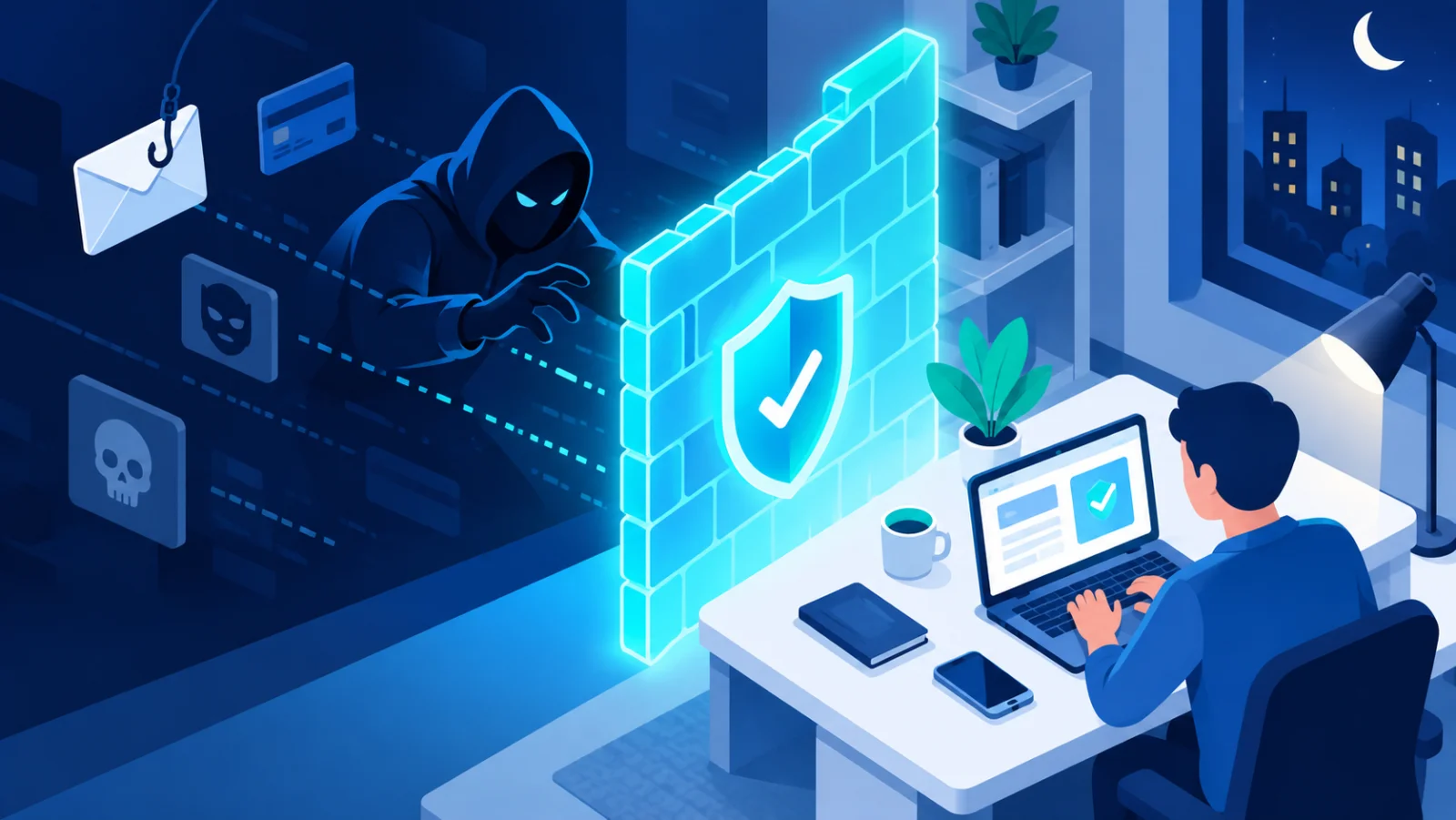
Social profiles are one of the richest sources of information for anyone trying to impersonate you, guess your security questions, or craft a convincing phishing↗ message. Common oversharing includes: your full birth date, your employer and job title (useful for business email compromise scams), your location in real time, and answers to common security questions (pet names, schools attended, mother's maiden name).
A quick social media privacy check
- Review who can see your posts, friend/follower list, and profile details, set these to the most private option that still works for you.
- Avoid posting travel plans in real time; share vacation photos after you're back.
- Search your own name occasionally to see what's publicly visible about you.
Remote work security isn't about locking everything down, it's about applying the same care to your home network and public profile that an office environment used to provide by default.