
Inclusive Security: Why Diversity Strengthens Cyber Defence
Diverse teams catch blind spots that homogeneous teams miss, and academic research consistently backs this up. Here's why inclusion is a security advantage, not just a values statement.
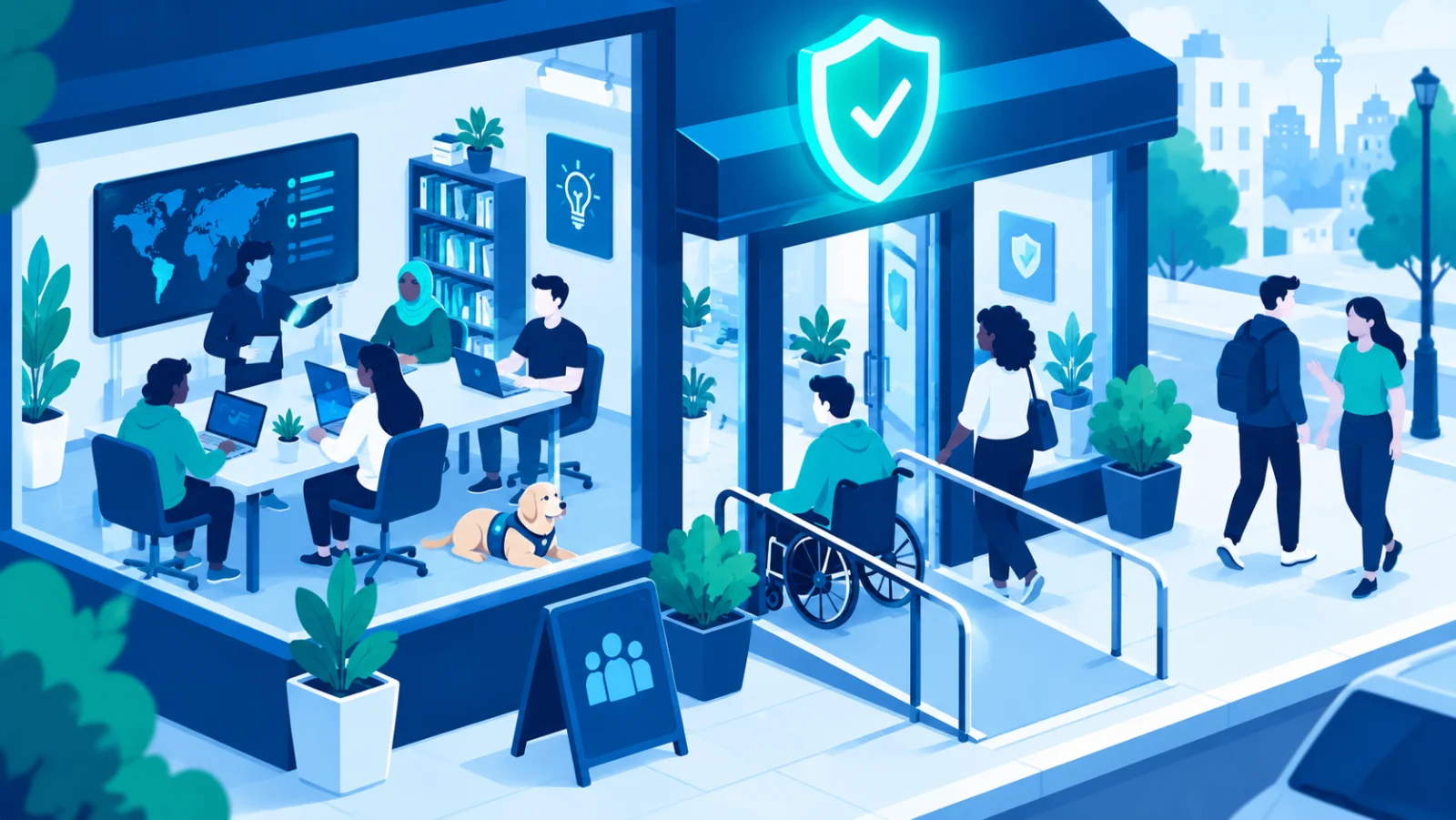
Cybersecurity↗ is fundamentally about anticipating how systems can fail or be misused, and that requires imagining a wide range of perspectives and attack scenarios. Teams built from a narrow range of backgrounds and experiences are more likely to share the same blind spots, which is exactly what attackers exploit↗.
The talent shortage makes inclusion a necessity, not just an aspiration
Cybersecurity faces a well-documented global talent shortage. Organizations that draw from the widest possible pool of backgrounds, disciplines, and life experiences aren't just doing the right thing socially, they're solving a real recruitment and capability problem that narrower hiring pools cannot.
How diverse perspectives improve security outcomes
- Threat modeling↗ improves when the people modeling threats represent a wider range of the users a system actually serves, different people notice different ways a system could be misused or fail.
- Social engineering↗ defence improves when security awareness accounts for how scams specifically target different groups (older adults, non-native speakers, new employees).
- Accessible security design, from password requirements to authentication↗ methods, improves when the people designing it include those who will use assistive technology or face language barriers.

What research and academia contribute
Academic cybersecurity research provides the evidence base the field relies on, from understanding why certain phishing↗ techniques succeed, to measuring how effective specific security awareness approaches actually are (as opposed to how effective they're assumed to be). Practical, everyday security guidance is strongest when it's grounded in this kind of tested research rather than intuition alone.
Cyber essentials as a foundation
Basic cyber hygiene↗ frameworks (often called "cyber essentials") exist specifically because a large share of successful attacks exploit a small number of well-known, preventable weaknesses, outdated software, weak access control↗, and missing basic configuration. These frameworks are deliberately designed to be achievable by any organization, not just those with dedicated security teams, which is itself an inclusion-minded approach to raising the security baseline broadly.
The strongest security teams don't just have deep technical skill, they have people who see the systems, and the threats against them, from meaningfully different angles.